


About
What is IP.rec?
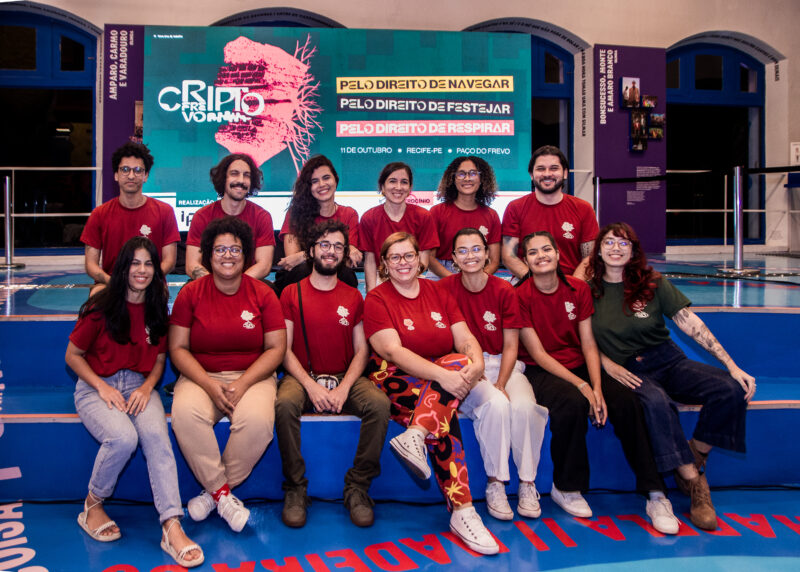
The Law and Technology Research Institute of Recife (IP.rec) is an independent center engaged in scientific research, advocacy, capacity building, and communication, with a focus on the social, ethical, and legal impacts of technological development. Since 2017, the Institute has been producing scientific studies, case analyses, campaigns, events, and initiatives that contribute to the construction of knowledge and to the development of critical awareness regarding the functioning of digital networks.
IP.rec is a non-profit civil association that operates within the ecosystem of Internet and Technology Governance. It therefore understands organized civil society as a primary agent in fostering and advancing political debate, which cannot be dissociated from the active use of the Internet. The Institute acts according to values that prioritize multistakeholder dialogue, recognizing the influence of multiple actors, including academia, government, and the business sector, on the technical and political development of the network.
-

Capacity Building
-

Communication
-

Advocacy (Digital Rights)
-

Research
History and Horizons
Recife carries a long-standing tradition in legal education in Brazil, represented by the Faculdade de Direito do Recife, one of the first law schools established in the country. This institution accompanied the early steps of the Institute through the DTE Research Group – Law, Technology, and the Effectiveness of Judicial Protection. From the need to expand the activities of this group of researchers, as well as those of the city of Recife itself, IP.rec emerged with the urgency of ensuring that the region’s demands were heard, becoming an active voice for the people of the Northeast and positioning the city within Brazil’s Internet Governance ecosystem.
In Recife, one of the largest technological hubs in the country, the Institute envisions a broad horizon of possible actions, always within its scope of activity and committed to the guarantee of rights. It is within this context that IP.rec operates, bringing together tradition and modernity to develop research, advocacy, capacity-building, and public communication initiatives.
Anti-Oppressions Policy
IP.rec is committed to confronting the structural oppressions that affect Brazilian society. In this sense, our institutional policies are grounded in the Anti-Oppressions Policy. This document defines key elements for understanding different forms of oppression (such as sexism, racism, homophobia, ableism, among others) and sets out the institutional guidelines for action and the positions adopted by the Institute.
Nossa equipe
Ramon D’barssoles
Junior Researcher
Software Engineer with over four years of professional experience, based in Recife, Brazil. Currently working on a Toyota project, contributing to the development of new features and microservices. Pursuing a postgraduate specialization in Deep Learning at the Federal University of Pernambuco (UFPE), where he integrates his professional experience with artificial intelligence.

Helton Leyendecker
Junior Researcher Helton Leyendecker
Junior Researcher
Attorney, researcher, and musician. Holds a Bachelor of Laws (LL.B.) from the Federal University of Pernambuco.
At IP.rec, he works in the field of Artificial Intelligence, with an emphasis on copyright, environmental impacts, and public policy.

Anicely Santos
Researcher Anicely Santos
Researcher
Master’s candidate in the Computer Engineering Program at the University of Pernambuco (UPE). Holds a degree in Systems Analysis and Development, with a specialization in Data Science and Analytics. President of the Python Brasil Association (2024–2025).

Diego Alexandre
Lead Researcher and Consultant Diego Alexandre
Lead Researcher and Consultant
Holds a degree in Letters (Portuguese/Spanish) from the Federal University of Pernambuco (2012), a master’s degree in Education from the Federal University of Pernambuco (2015), and a doctorate in Linguistics from the Federal University of Paraíba (2021). Currently, he is a professor at the Federal University of Rio Grande do Norte, where he works in the area of Didactics and Spanish Language Teaching. He coordinates research on the Historiography of Linguistics and Spanish language teaching within the HEMEPOL research group (Historiography, teaching, memory and language policies), with an extension project focused on scientific initiation in this area. In addition, he is a screenwriter, director, and editor of the podcast HEMEPOL entre.vistas. His research interests include language teacher training, teaching-learning-assessment, history of teaching and history of Spanish language teaching materials in Brazil, historiography of linguistics, and glottopolitics. At IP.rec, the focus is on knowledge production and the learning of technical content, with an emphasis on emancipatory perspectives.

André Fernandes
Board André Fernandes
Board
(he/him)
Attorney. Professor in Graduate Programs in Law and Technology at UFPE, UPE, and CESAR School. PhD Candidate in Law, with a focus on Artificial Intelligence, the History of Legal Concepts, and Innovation. Founder of the Law and Technology Research Institute of Recife (IP.rec). Master of Laws from the Federal University of Pernambuco, with a focus on Legal Theory. President of the Commission on Technology and Information Law (CDTI) of the Pernambuco Bar Association (OAB/PE). Specialist in Artificial Intelligence from The Amsterdam Law and Technology Institute (ALTI) & Vrije University Amsterdam, in AI Policy from the Center for AI and Digital Policy (CAIDP), and certified in Internet Governance by the Brazilian Internet Steering Committee (CGI.br), DiGI (UCU) and SSIG.

Mariana Canto
Board Mariana Canto
Board
Executive Director and Secretary-General of IP.rec. PhD Candidate in Law (part of the interdisciplinary cluster Human Rights, Democracy and Advocacy in the Digital Age) at the University of Stirling, United Kingdom. Master of Science and Chevening Scholar 2021/22 in Science, Technology and Society (STS) from the University of Edinburgh, United Kingdom. LL.B. from the Federal University of Pernambuco, having completed part of her studies at the University of Hamburg, Germany. She was a Visiting Researcher and German Chancellor Fellow 2022/23 at the Wissenschaftszentrum Berlin für Sozialforschung (WZB), Germany. She serves as a mentor in the Internet of Rights program at the NGO Article 19, United Kingdom. An alumna of the CGI.br Internet Governance School (2018), she also worked with the Secretariat of the United Nations Internet Governance Forum (IGF).
At IP.rec, she contributes to projects in the areas of “Privacy and Surveillance” and “Multistakeholderism and Public Participation.” She is also interested in the study of algorithm regulation and its influence on asymmetric power relations.

Raquel Saraiva
Board Raquel Saraiva
Board
President and Founder of IP.rec. Master of Science in Computer Science from the Federal University of Pernambuco and LL.B. from the Catholic University of Pernambuco. Alumna of the CGI.br Internet Governance School (2017).
At IP.rec, she works primarily in the areas of Algorithms and Artificial Intelligence, Privacy and Surveillance, and Virtual and Augmented Reality Technologies, and is also engaged in discussions on gender and technology.

Aline Melo
Communications Coordinator Aline Melo
Communications Coordinator
(She/Her)
Holds a Master’s degree in Communication from the Federal University of Minas Gerais (UFMG) and a degree in Journalism from the Federal University of Pernambuco (UFPE). She is a researcher at IPÊ – Institutions, Publics, and Collective Experiences, affiliated with the Department of Social Communication at FAFICH, UFMG.
Her work focuses primarily on Science Communication, Technology, Politics, and Social Movements. At IP.rec, she serves as Communications Coordinator and Press Officer.

Carolina Branco
Junior Researcher Carolina Branco
Junior Researcher
Holds a Bachelor of Laws (LL.B.) from the Federal University of Pernambuco (UFPE).
At IP.rec, she works in the areas of Virtual and Augmented Reality Technologies and Artificial Intelligence.

Luana Batista
Junior Researcher Luana Batista
Junior Researcher
Holds a Bachelor’s degree in Computer Engineering from the Federal University of South and Southeast Pará (Unifesspa) and is a researcher in the fields of telecommunications and artificial intelligence.
At IP.rec, she works in the areas of Algorithms and Artificial Intelligence and contributes to the Cryptography Observatory (ObCrypto).
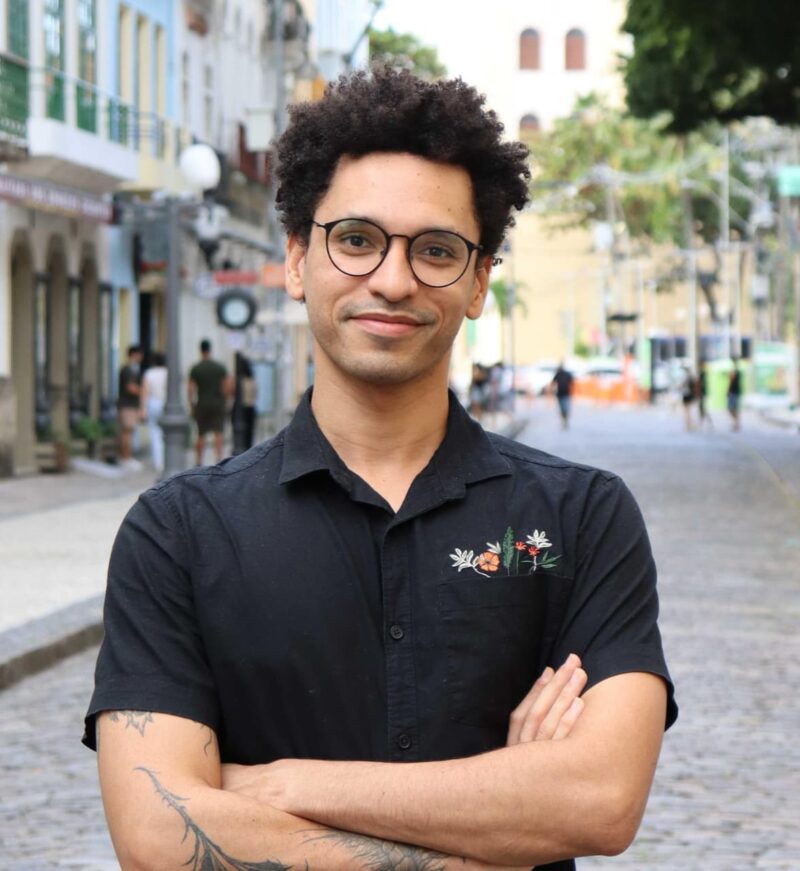
Pedro Silva Neto
Researcher Pedro Silva Neto
Researcher
Has a Master’s degree from the Communication Program at the Federal University of Pernambuco, in the research line Media, Languages, and Sociopolitical Processes. Holds a bachelor’s degree in Advertising from the Federal University of Pernambuco.
He has worked in communication agencies and in media activism. His research interests include public security and citizen media and technological empowerment. At IP.rec, he contributes to the Platform Regulation, Government Hacking, and Facial Recognition groups, as well as to the Cryptography Observatory (ObCrypto).

Rayssa Araujo
Administrative Assistant Rayssa Araujo
Administrative Assistant
Logistics Technician. She serves as Administrative Assistant at IP.rec.

Rhaiana Valois
Researcher Rhaiana Valois
Researcher
Attorney, currently pursuing a postgraduate specialization in Brazil’s General Data Protection Law (LGPD) at Legale Educacional, and holds an LL.B. from the Federal University of Pernambuco (UFPE). She serves as Secretary of the Artificial Intelligence Subcommittee of the Commission on Technology and Information Law (CDTI) of the Pernambuco Bar Association (OAB/PE).
She participated in the 41st Exchange Program of the Administrative Council for Economic Defense (PinCade) and in the training program of the Center for the Analysis of Freedom and Authoritarianism (LAUT). A former member of the Legal Design Lab at the University of São Paulo (USP), she also completed a postgraduate internship at the Civil Appeals Unit of the Public Defender’s Office of Pernambuco (DPPE).
She is currently a researcher at the Institute for Research on Law and Technology of Recife (IP.rec), working on issues related to digital platform regulation, gender, Artificial Intelligence, cryptography, and the rights of children and adolescents.
Who has already worked here
André Ramiro
Caio Scheidegger
Clara Guimarães
Clarissa Mendes
Danielle Novaes
Débora Torres
El Hana Filipides
Isabel Constant
Isabela Inês
Isadora Lages
José Paulo Lima
Laís Arcanjo
Laura Pereira
Lunara Santana
Marcos César Pereira
Paju
Paula Corte Real
Pedro Amaral
Rebeka Vilaça
Rodrigo Alexandre
Thais Aguiar